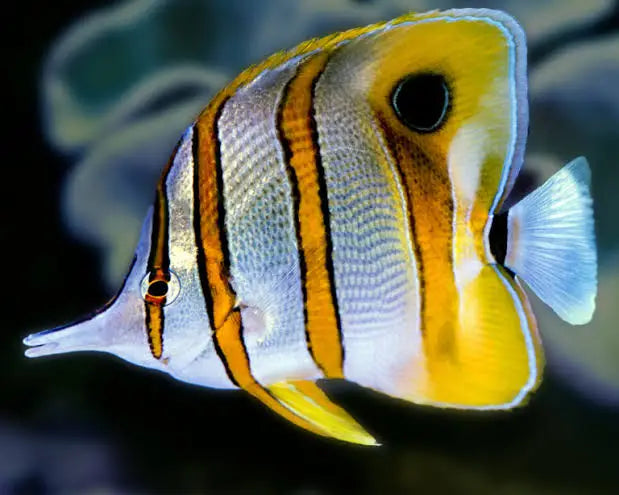
Copper Banded Butterfly Fish
Copper Banded Butterfly Fish
Couldn't load pickup availability
The Copperband Butterflyfish (Chelmon rostratus) is a beautiful and distinctive marine fish, easily recognized by its copper-colored vertical bands, long pointed nose, and bold black-and-white markings. It is a popular choice for experienced marine aquarists because of its elegant appearance and interesting feeding behavior.
Family: Chaetodontidae
Scientific Name: Chelmon rostratus
Common Name: Copperband Butterflyfish
Behavior:
The Copperband Butterflyfish is generally peaceful and can be shy when first introduced to an aquarium. It may become more confident once established. It is usually best kept singly unless a compatible pair is introduced under suitable conditions. It can be territorial toward other butterflyfish with a similar appearance.
Diet:
In the wild, it feeds on small invertebrates, worms, crustaceans, and other organisms found among rocks and corals. In captivity, offer a varied diet including mysis shrimp, enriched brine shrimp, frozen marine foods, and other small meaty foods. A mature aquarium with plenty of natural food sources can help support its feeding needs.
Size:
The Copperband Butterflyfish can grow to approximately 8 inches (20 cm) in length.
Reef Safe:
Generally considered reef compatible with caution. It may eat or pick at feather dusters, tube worms, anemones, and some corals or small invertebrates. Individual fish can behave differently, so it is not considered completely reef safe.
Best Aquarium:
A mature saltwater aquarium of at least 100 gallons (380 liters) is recommended, with larger tanks being preferable. Provide plenty of live rock, hiding places, and open swimming space. A well-established aquarium with abundant natural food is especially beneficial for this species.
Care Level:
Intermediate to Advanced
Lifespan:
With excellent care and a suitable diet, Copperband Butterflyfish can live for several years in captivity.
Summary:
The Copperband Butterflyfish is a peaceful and attractive addition to a mature marine aquarium. Its specialized feeding habits make it more challenging to keep than many other marine fish, so it is best suited to experienced aquarists who can provide a stable environment and a varied diet.