Emperor Angelfish
Emperor Angelfish
Couldn't load pickup availability
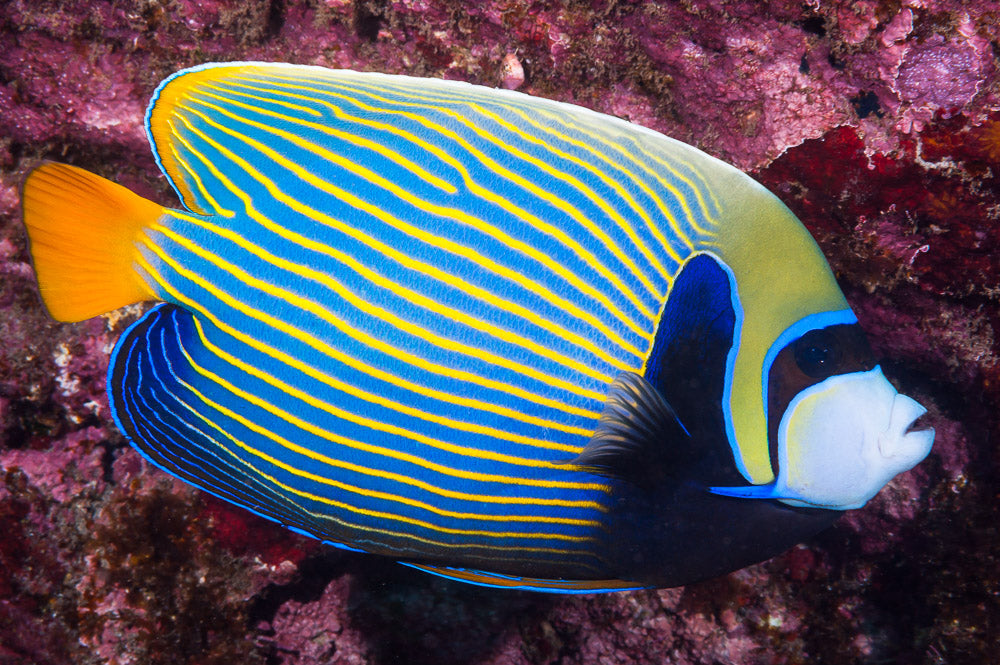
The Emperor Angelfish (Pomacanthus imperator) is one of the most beautiful and popular marine angelfish. It is easily recognized by its bright blue and yellow stripes, making it an impressive centerpiece for a large saltwater aquarium.
Family: Pomacanthidae
Scientific Name: Pomacanthus imperator
Common Name: Emperor Angelfish
Behavior:
The Emperor Angelfish is active, confident, and territorial. Adults can become aggressive toward other angelfish and similarly shaped fish, especially in smaller aquariums. It is best kept as the only large angelfish in the aquarium unless the tank is very large and carefully planned.
Diet:
It is an omnivore that feeds mainly on marine algae, sponges, tunicates, and other small invertebrates. In captivity, provide a varied diet including marine algae, spirulina, seaweed, high-quality pellets, frozen foods, and mysis shrimp.
Size:
An adult Emperor Angelfish can reach approximately 15 inches (38 cm) in length.
Reef Safe:
Not considered reef safe. Emperor Angelfish may nip at corals, sponges, clams, and other reef invertebrates. Some individual fish may behave differently, but they should generally be kept in a fish-only or fish-only-with-live-rock (FOWLR) aquarium.
Best Aquarium:
Because of its large adult size and active swimming behavior, the Emperor Angelfish needs a large, mature saltwater aquarium of at least 180 gallons (680 liters), with larger tanks being even better. Provide plenty of live rock, caves, and open swimming space. Strong filtration and excellent water quality are important for long-term health.
Care Level:
Intermediate to Advanced
Lifespan:
With proper care, a healthy Emperor Angelfish can live for 10–15 years or more in captivity.
Summary:
The Emperor Angelfish is an excellent choice for experienced marine aquarists who have a large, mature aquarium. Its stunning colors and impressive personality make it a spectacular display fish, but its size, territorial nature, and tendency to eat corals mean it is not suitable for most reef aquariums.